The Journal · 5 min read
Framed Art for a Law Office: What to Hang Behind the Desk
The founding documents were made for the rooms where the law is practiced. A guide to choosing framed civic art for an attorney’s office — and to giving it well.
Walk into a law office worth its retainer and the wall behind the desk is never bare, and never busy. It carries one thing — a document that says, without a word, this is what I do, and I take it seriously. For most of the profession, that document is one of three.
The three founding documents, ranked by the room
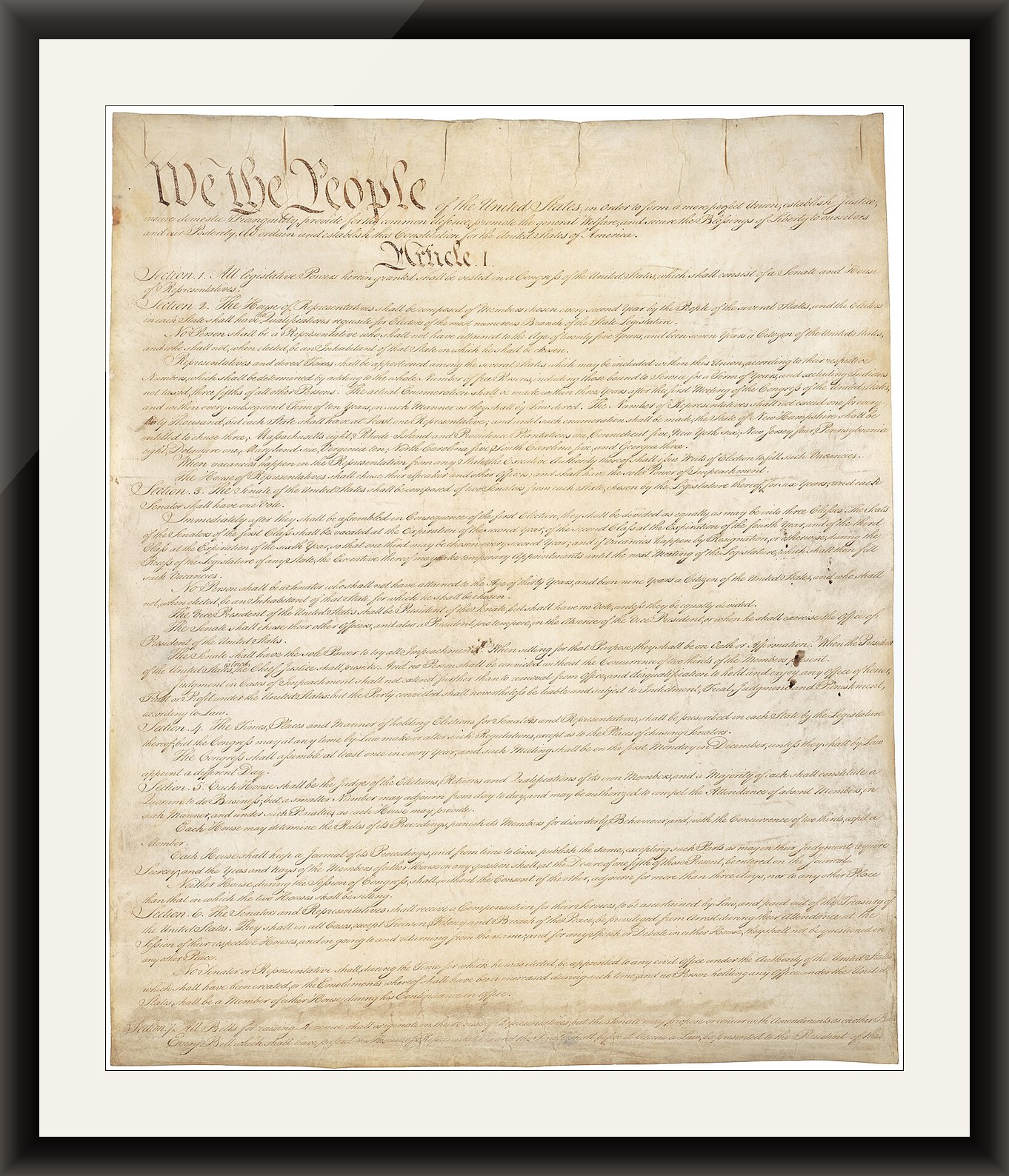
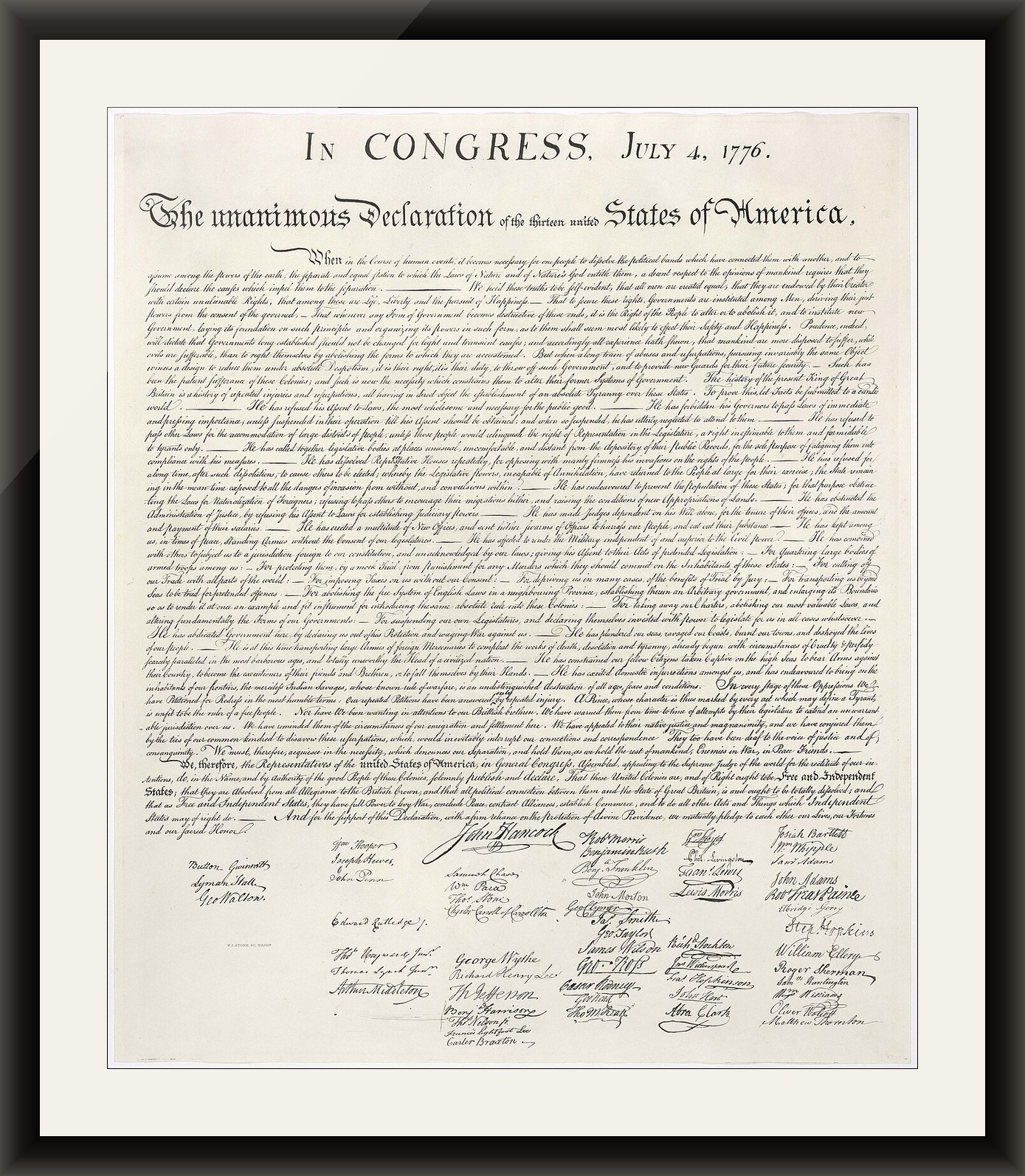
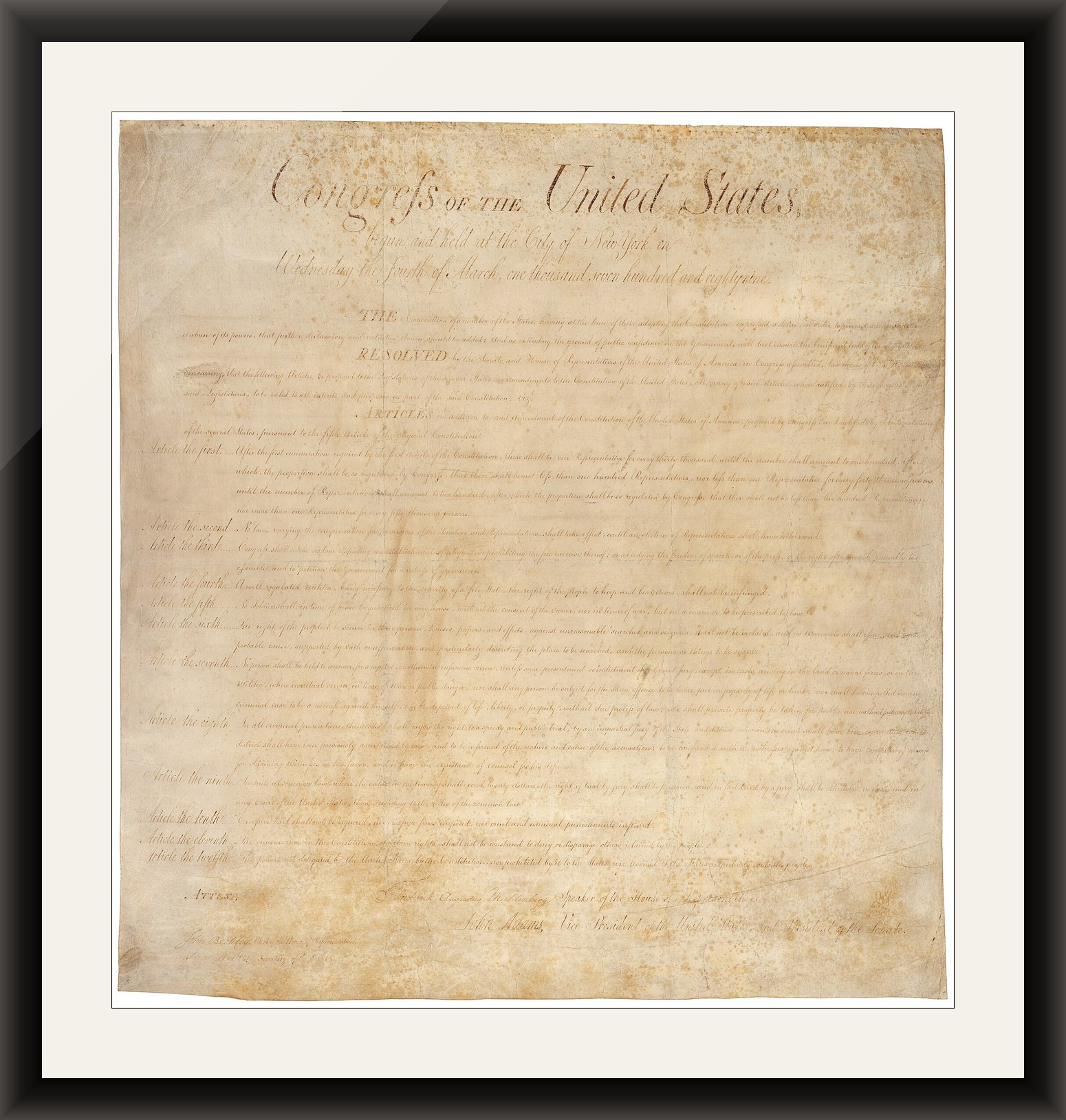
The U.S. Constitution is the natural choice for the office of anyone who argues before a court. It is spare, confident, and text-heavy in a way that reads as substance across a room. The Declaration of Independence — with its 56 signatures reproduced as part of the artwork — is the more personal, more emotional piece; it suits a founding partner, a graduation gift, or a swearing-in. The Bill of Rights is the quiet specialist’s pick: constitutional, civil-liberties, and criminal-defense practices tend to gravitate to it.
Drawn, not printed — why it matters here of all places
A printed constitution is a poster. Anyone can buy one, and the eye knows it. Every Gallery Treasures piece is drawn by hand — real pigment ink laid down on archival cotton, line by line — so that up close it reads as a true drawing, with the weight and edge of a nib. In a room where clients are deciding whether to trust you with the most important thing in their life, that difference is not decoration. It is a tell.
Framing for a professional room
Two finishes cover nearly every office: matte black for a modern, glass-walled practice, and natural oak for panelled, traditional chambers. Each piece is hand-framed behind glass and arrives ready to hang. For the space directly behind a desk, the medium (18×24) reads best on camera and in person; for a reception wall or a conference room, size up.
Giving it as a gift
A framed founding document is the rare gift that is both personal and appropriate — for a call to the bar, a partnership, a retirement, or the opening of a firm. It is understood as an artistic reproduction and a craft object, never sold as an authentic or original document, which is exactly why it can be given without awkwardness: the value is in the making, not a claim about the paper.
Start with the Civic & Founding collection, or read more about why a drawn reproduction outlives a print.